
How to Choose the Right Abrasive for Any Job
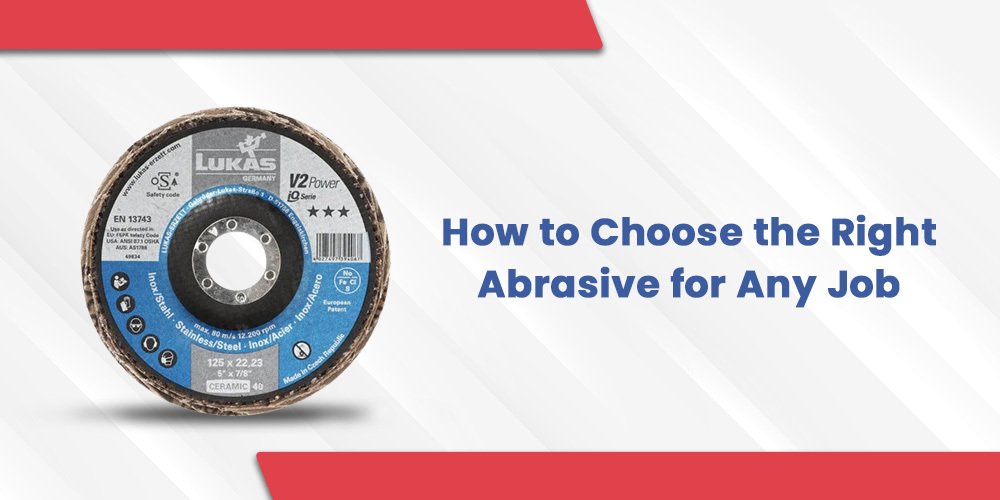
In the world of metalworking, woodworking and fabrication, the success of a project often comes down to the details. And one of the most critical details is the finish. A smooth, clean and well-prepared surface is not just a matter of aesthetics; it’s a matter of quality, durability and performance.
At the heart of every great finish is the right abrasive. But with a seemingly endless variety of abrasive grains, products and grit sizes available, how do you choose the right one for your specific job? It’s a question we get asked all the time at Supra Industries and it’s one that deserves a detailed answer.
This guide is designed to be your go-to resource for choosing the right abrasive. We’ll break down the decision-making process into a series of simple, logical steps, empowering you to make the right choice every time, whether you’re a seasoned professional or a weekend warrior.
Step 1: Understand Your Material (The Workpiece)
Before you even think about which abrasive to use, you need to have a thorough understanding of the material you’re working with. Different materials have different properties and what works for one may not work for another.
Ferrous Metals
Ferrous metals are those that contain iron, such as carbon steel, stainless steel and cast iron. They are the most common materials in metalworking and fabrication.
- Carbon Steel: This is the workhorse of the metal world. It’s relatively easy to work with, but it can be prone to rust. For carbon steel, you’ll generally want to use an abrasive that is tough and durable, such as zirconia alumina or ceramic alumina.
- Stainless Steel: Stainless steel is harder and more resistant to corrosion than carbon steel, but it’s also more sensitive to heat. When working with stainless steel, it’s crucial to use an abrasive that cuts cool to prevent discoloration and warping. Ceramic alumina is the ideal choice for stainless steel, as it provides a fast, cool cut.
- Cast Iron: Cast iron is a brittle material that requires a tough, durable abrasive. Zirconia alumina and ceramic alumina are both excellent choices for grinding and finishing cast iron.
Non-Ferrous Metals
Non-ferrous metals are those that do not contain iron, such as aluminum, copper and brass. These metals are softer than ferrous metals and have a lower melting point, which presents a unique set of challenges.
- Aluminum: Aluminum is a soft, gummy metal that can easily “load” or clog an abrasive. To prevent this, you’ll want to use an abrasive with an open-coat structure and a grinding aid. Ceramic alumina with a top coat is an excellent choice for aluminum, as it resists loading and provides a fast, cool cut.
- Copper and Brass: These metals are also prone to loading, but to a lesser extent than aluminum. A good quality aluminum oxide or zirconia alumina abrasive will generally work well for copper and brass.
Wood
Wood is a much softer material than metal, so you’ll need to use an abrasive that is designed for woodworking. The most common abrasive grain for wood is aluminum oxide.
Composites
Composites, such as fiberglass and carbon fiber, are becoming increasingly common in a variety of industries. These materials are abrasive and can quickly wear down conventional abrasives. For composites, you’ll want to use a diamond or silicon carbide abrasive.
Step 2: Define Your Task
Once you know what material you’re working with, the next step is to define the task you need to accomplish. Are you trying to remove a large amount of material, or are you looking for a fine, polished finish? The task at hand will determine the type of abrasive product and the grit size you should use.
Heavy Stock Removal
This involves a variety of tasks where the primary goal is to remove a large amount of material quickly. This includes:
- Weld Grinding: Removing excess weld material to create a smooth, flush surface.
- Shaping: Altering the shape of a workpiece.
- Beveling: Creating an angled edge on a piece of metal.
For heavy stock removal, you’ll want to use a coarse-grit abrasive (40-60 grit) in a durable form factor, such as a grinding wheel, a fiber disc, or a flap disc.
Blending and Finishing
Blending and finishing are all about creating a smooth, uniform surface. This includes:
- Weld Blending: Smoothing out a weld so that it’s flush with the surrounding material.
- Removing Imperfections: Getting rid of scratches, pits and other surface defects.
- Preparing for Paint: Creating a smooth, consistent surface that is ready for painting or coating.
For blending and finishing, you’ll want to use a medium- to fine-grit abrasive (80-120 grit) in a form factor that provides a good balance of cutting power and control, such as a flap disc or a sanding disc.
Deburring
Deburring is the process of removing the sharp edges and burrs that are often left behind after cutting or machining. For deburring, you’ll want to use a product that can get into tight spaces and provide a high degree of control, such as a mounted point, a carbide burr, or a convolute wheel.
Cutting
Cutting involves slicing through a piece of material. For cutting, you’ll need to use a specialized cutting wheel that is designed for the material you’re working with.
Polishing
Polishing is the final step in the finishing process. It’s all about creating a smooth, reflective surface. For polishing, you’ll need to use a fine-grit abrasive (150 grit and up) in a form factor that is designed for polishing, such as a polishing wheel or a buffing pad.
Step 3: Choose the Right Abrasive Grain
The abrasive grain is the heart of any abrasive product. It’s what does the actual cutting and different grains are designed for different materials and applications.
- Aluminum Oxide: The workhorse of the abrasive world. It’s a versatile and economical grain that is suitable for a wide range of applications on both ferrous and non-ferrous metals, as well as wood and composites.
- Zirconia Alumina: A step up from aluminum oxide in terms of toughness and durability. It’s a self-sharpening grain that excels at heavy stock removal on carbon and stainless steel.
- Ceramic Alumina: The king of abrasive grains. It’s an exceptionally tough and self-sharpening grain that provides the fastest cut rate and the longest life, especially on hard-to-grind materials like stainless steel and high-alloy metals.
- Silicon Carbide: A very hard and sharp grain that is ideal for grinding non-ferrous metals, cast iron and non-metallic materials like ceramics and glass.
- Diamond: The hardest of all abrasive grains. It’s used for grinding and cutting the hardest materials, such as concrete, stone and composites.
Step 4: Select the Right Abrasive Product
The abrasive product, or “form factor,” is the physical form that the abrasive takes. The right product for your job will depend on the task at hand, the material you’re working with and the tool you’re using.
- Grinding Wheels: The go-to choice for heavy stock removal and shaping. They are available in a variety of sizes and thicknesses to suit different applications.
- Flap Discs: A versatile product that can grind and finish in one step. They are ideal for weld blending, deburring and finishing.
- Fiber Discs: A more aggressive option than flap discs, fiber discs are designed for heavy-duty grinding and stock removal.
- Sanding Discs: Available in a variety of backing types (paper, cloth, film) and attachment systems (Velcro, PSA), sanding discs are used for finishing and sanding a wide range of materials.
- Mounted Points and Carbide Burrs: Small, precision tools that are used for intricate work, deburring and porting.
- Abrasive Belts and Rolls: Used for sanding and finishing large, flat surfaces.
- Cutting Wheels: Thin, rigid wheels that are used for cutting metal.
Step 5: Understand Grit Size
The grit size of an abrasive refers to the size of the abrasive grains. A lower grit number indicates a coarser grain, while a higher grit number indicates a finer grain.
The right grit size for your job will depend on the task at hand and the finish you’re trying to achieve.
- Coarse Grits (40-60): For heavy stock removal and aggressive grinding.
- Medium Grits (80-120): For blending, finishing and light weld removal.
- Fine Grits (150 and up): For final finishing and polishing.
Step 6: The Importance of the Backing Material
For abrasive products like discs and belts, the backing material plays a crucial role in the product’s performance and durability.
- Paper: The most common and economical backing material. It’s suitable for light sanding and finishing applications.
- Cloth: More durable than paper, cloth backings are used for more demanding applications, such as heavy-duty sanding and grinding.
- Fiber: The most durable backing material. It’s used for heavy-duty grinding applications, such as fiber discs.
Step 7: Safety First
Last but certainly not least, safety should always be your top priority when working with abrasives. Abrasives are powerful tools that can cause serious injury if they are not used properly.
Always wear the proper Personal Protective Equipment (PPE), including:
- Safety glasses or a face shield: To protect your eyes from flying debris.
- Gloves: To protect your hands from cuts and abrasions.
- Hearing protection: To protect your ears from the noise of the grinder.
- Respiratory protection: To protect your lungs from abrasive dust.
In addition to wearing the proper PPE, you should also inspect your abrasive products before each use to make sure they are not damaged. And always use the right tool for the job and follow the manufacturer’s instructions.
Putting It All Together: Your Abrasive Selection Cheat Sheet
Choosing the right abrasive can seem like a daunting task, but it doesn’t have to be. By following the steps outlined in this guide, you can make an informed decision every time.
To make it even easier, here’s a quick “cheat sheet” to help you choose the right abrasive for your job:
| Material | Task | Abrasive Grain | Product | Grit Size |
| Carbon Steel | Heavy Stock Removal | Zirconia/Ceramic | Grinding Wheel/Fiber Disc | 40-60 |
| Stainless Steel | Blending/Finishing | Ceramic | Flap Disc/Sanding Disc | 80-120 |
| Aluminum | Deburring | Ceramic | Mounted Point/Carbide Burr | 120+ |
| Wood | Sanding/Finishing | Aluminum Oxide | Sanding Disc/Belt | 80-220 |
Conclusion
Choosing the right abrasive is a critical step in any project that involves grinding, finishing, or polishing. By taking the time to understand your material, define your task and select the right abrasive grain, product and grit size, you can achieve a professional-quality finish every time.
At Supra Industries, we’re passionate about abrasives and we’re committed to helping our customers find the right solution for their specific needs. If you have any questions about choosing the right abrasive, or if you’d like to learn more about our full line of high-performance abrasive products, please don’t hesitate to contact us. Our team of experts is always here to help.