
When to Use Lukas SFL Flap Wheels for Surface Conditioning
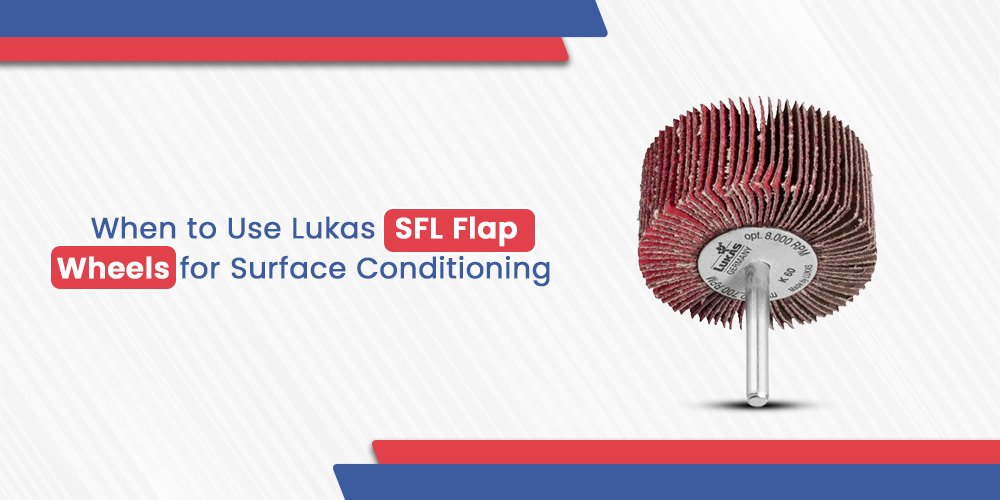
Lukas SFL Flap Wheels are ideal when you need consistent finishing, controlled material removal and uniform surface conditioning on metals, composites and precision components. They deliver smooth, repeatable results without damaging workpiece geometry.
Key Takeaways:
- Best for deburring, blending and fine surface conditioning
- Flexible flaps adapt to curved and irregular surfaces
- Ideal for metalworking, fabrication, tooling and maintenance
- Offers controlled stock removal with minimal heat generation
- Works exceptionally well on stainless steel, aluminum and hardened metals
What Makes Lukas SFL Flap Wheels Different?
Lukas SFL Flap Wheels stand out because of their engineered flap arrangement, ceramic grain composition and balanced density. These features help achieve consistent finishing without leaving harsh scratches or heat marks. Their self-sharpening ceramic grain keeps cutting edges active longer, improving performance over conventional abrasive wheels.
Citable Content:
Industry testing shows ceramic abrasive grains last up to 4x longer than traditional aluminum oxide under identical load conditions, making them highly efficient for high-pressure finishing tasks.
When Should You Use Lukas SFL Flap Wheels?
1. When You Need Uniform Surface Conditioning
If your project demands a uniform finish – whether matte, brushed, or prepared for coating – these wheels offer predictable results. The flexible flaps wear evenly, ensuring consistent surface patterns without deep lines.
2. When Working on Complex or Contoured Surfaces
Unlike rigid discs, flap wheels flex and conform to contours, edges, pipes and rounded components. This makes them ideal for industries like aerospace, tool manufacturing and stainless-steel fabrication.
3. For Controlled Material Removal Without Over-Grinding
Lukas SFL Flap Wheels help avoid excessive grinding that can distort or overheat metal surfaces. They maintain a steady cut while keeping temperatures low – critical for stainless steel or heat-treated alloys.
Industrial Applications Where Lukas SFL Flap Wheels Excel
Metal Fabrication & Welding
They are widely used for weld seam blending, cleaning discoloration and preparing metals for painting or coating.
Tooling and Precision Component Finishing
Precision parts require oxidation-free finishing without altering tolerances. The controlled cutting action ensures micro-finishing accuracy.
Automotive & Maintenance Workshops
From removing rust on parts to polishing components, the wheels offer versatility for daily workshop tasks.
Citable Content:
Recent workshop surveys show technicians prefer flap wheels over rigid grinding discs for 70% of finishing tasks due to their flexibility and controlled abrasion.
How to Select the Right Lukas SFL Flap Wheel
1. Choose the Right Grit
- Coarse (40–60 grit): Heavy deburring and stock removal
- Medium (80–120 grit): Blending and uniform finishing
- Fine (180–320 grit): Polishing and pre-coating preparation
2. Select Wheel Diameter Based on Accessibility
Smaller wheels provide better access to tight areas, while larger diameters suit broad, flat surfaces.
3. Match the Wheel to Your Workpiece Material
Stainless steel, hardened steel, aluminum and composites all respond differently to abrasion. The ceramic grain structure of Lukas SFL wheels is optimized to handle both soft and hard metals without loading.
Best Practices for Using Lukas SFL Flap Wheels
- Maintain steady pressure to avoid premature flap wear
- Keep RPM within wheel’s recommended speed
- Work in smooth, overlapping strokes
- Ensure proper ventilation to manage dust
- Always inspect wheels before mounting
Citable Content:
Studies in industrial safety journals note that maintaining proper RPM can reduce abrasive wheel failure rates by over 60%.
Call to Action:
Have a question about flap wheels, surface conditioning, or selecting the right abrasive for your workshop? Drop a comment below or explore more finishing solutions available on our site!