
What Is Best Rust Removal: How to Use Top LWM Combined Abrasive Rolls
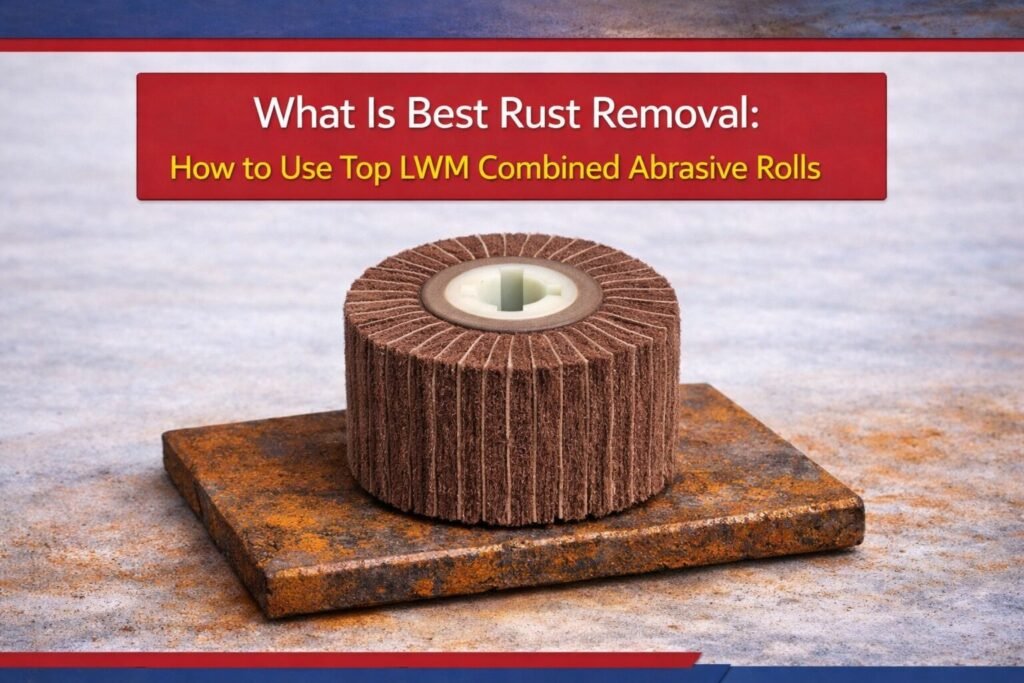
Industrial corrosion eradication requires a systematic balance between rapid stock removal and strict workpiece tolerance preservation. Traditional surface preparation methods frequently introduce high thermal stress, localized structural distortion, and unpredictable geometric deviations. For automated metal fabrication, heavy plant maintenance, and large-scale manufacturing facilities, implementing LWM Combined Abrasive Rolls (constructed from alternating layers of premium abrasive fleece and coated abrasive cloth) provides an engineered solution that addresses both mechanical efficiency and total cost of ownership (TCO).
Industrial Rust Removal Optimization
Industrial oxide and rust removal is most efficiently executed utilizing LWM combined abrasive rolls engineered with alternating aluminum oxide or ceramic abrasive cloth and non-woven synthetic nylon fleece. This specialized geometry provides simultaneously high stock-removal rates and structural conformability, completely eliminating structural substrate deformation while maintaining rotational speed tolerances up to 6,000 RPM.
Key Takeaways for Industrial Stakeholders
- For CFOs & Wholesale Buyers: Selecting premium combined abrasive rolls reduces total component consumption by up to 40% compared to standard low-tier non-woven flap rolls, minimizing long-term procurement risks and stabilizing supply chain operational expenses.
- For Plant Managers & Production Engineers: The self-sharpening, dual-matrix architecture ensures consistent surface roughness ($R_a$) while eliminating thermal degradation and workpiece blue discoloration during high-volume rust eradication pipelines.
B2B Performance Comparison Matrix
| Technical Metric | Low-Tier Non-Woven Commodity Alternative | Supra Industries LWM Premium Combined Roll | Industrial Impact & Significance |
| Technical Threshold | High deflection; rapid loading of oxide debris; zero underlying grain structural support. | Controlled durometer rating; structural cloth backing interleaved with resilient nylon fleece. | Prevents premature tool failure; ensures uniform surface preparation across complex contours. |
| Operational Lifespan | 8 to 14 production cycles before catastrophic structural breakdown. | 45+ extended production cycles under continuous linear pressure. | Decreases recurring machine downtime for tool changes by more than 300%. |
| TCO Impact | Lower upfront unit cost but elevated total cost-per-part via high scrap rates. | Optimized cost-per-part via continuous, multi-layer abrasive degradation exposure. | Significant reduction in secondary rework and post-process scrap expenditures. |
| Procurement Risk | High; inconsistent batch-to-batch density tolerances leading to line stalls. | Low; manufactured under strict ISO 9001:2015 production quality workflows. | Ensures strict compliance with global aerospace and defense surface finishing standards. |
Material Science of LWM Combined Abrasive Rolls
Understanding the performance of the LWM combined abrasive configuration requires an analysis of its substrate adhesion dynamics and physical structural composition. Unlike homogeneous finishing tools, the combined roll utilizes a specialized interleaved geometry:
[ Abrasive Cloth Layer: High Stock Removal / Grain Micro-Fracture ]
——————————————————————-
[ Abrasive Fleece Layer: Cushioning / Contouring / Debris Escape ]
——————————————————————-
[ Abrasive Cloth Layer: High Stock Removal / Grain Micro-Fracture ]
The heavy-duty abrasive cloth segments deliver the required tensile shear strength to fracture heavy, deep-seated iron oxide matrices down to the base metal substrate. Concurrently, the integrated non-woven nylon fleece layers absorb excess operational vibration, establishing a dynamic balance calibration across the workpiece contact zone. This cushioning effect prevents the tool from gouging, clipping, or over-grinding structural sheet metal components.
▲
[Applied Force]
│
▼
┌─────────────────────────┐ ◄── Combined Roll Matrix
│ ░░░ Fleece ▓▓▓ Cloth │ (Alternating Layers)
└─────────────────────────┘
===============≈=========== ◄── Oxide Layer (Rust)
─────────────────────────── ◄── Sound Base Metal Substrate
Furthermore, the open-web architecture of the synthetic fleece continuously channels micro-crystalline rust particulates away from the working interface. This completely prevents loading and face-glazing, which are the primary causes of premature tool disposal in heavy industrial applications.
Technical Deployment Parameters and Thermal Control
Rotational Speed and Harmonic Calculations
To ensure maximum operational efficiency and structural integrity, LWM combined rolls must be operated within precise rotational parameters. While the absolute structural limit permits up to 6,000 RPM for a standard 100x100mm roll configuration, the optimal technical velocity for heavy rust removal lies between 2,800 and 3,500 RPM. Operating within this window optimizes the grain wear profile, encouraging the deliberate micro-fracturing of ceramic or aluminum oxide grains rather than macro-cleavage or premature shedding.
Thermal Degradation Thresholds
Exceeding the thermal degradation threshold of a surface-conditioning tool drastically compromises safety and output quality. Standard resin bonds weaken rapidly under structural friction, but the advanced synthetic resin compounds utilized in Supra Industries’ premium tool distributions maintain structural integrity beyond 180°C.
- Process Inspection Note: Continuous monitoring of the metal substrate temperature prevents localized alpha-case formation on alloyed steels and structural buckling on thin-gauge materials.
- Surface Roughness Target: Operating at 3,000 RPM with a consistent 120/80 grit combined roll structure generates an anchor pattern surface roughness profile (Rz) of 15–25 micrometers, which is the ideal physical threshold for industrial powder coats and marine epoxy adhesion.
Step-by-Step Execution Guide for High-Volume Rust Eradication
Step 1: Spindle and Drive System Calibration
Mount the 19mm bore LWM combined roll onto a variable-speed surface conditioning tool or automated robotic arm assembly, ensuring all four integrated keyways engage fully with the drive spindle. Check the dynamic balance to prevent any axial or radial runout that could induce micro-fractures in the tool backing matrix.
Step 2: Surface Contamination Pre-Screening
Verify that the iron oxide layer is free from thick grease or viscous hydrocarbon compounds. Heavy oils should be chemically stripped prior to abrasion to ensure the non-woven fleece layers maintain their structural open porosity for dust evacuation.
Step 3: Directional Execution Paths
Engage the workspace with a consistent, linear drag path parallel to the grain orientation of the underlying metal structure. Maintain a steady contact angle between 10° and 15°.
Critical Safety Metric: Allow the continuous self-sharpening wear profile of the tool to perform the material extraction. Avoid applying excessive manual or downward hydraulic pressure exceeding 25 Newtons, which accelerates internal core heat generation and reduces overall tool lifespan.
Step 4: Intermittent Surface Roughness Audits
Utilize a calibrated digital profilometer every 50 production parts to inspect the target surface anchor profile. When the Ra value deviates beyond specified geometric tolerances, verify the operational RPM settings and inspect the roll for uniform peripheral wear.
Supply Chain Security and Wholesale Custom Procurement
For tier-one manufacturing lines and major industrial distributors, any disruption in abrasive consumable availability directly triggers high factory downtime and delayed delivery penalties. Relying on generic, non-certified imports exposes operations to severe performance variances and catastrophic compliance failures on the factory floor.
Supra Industries mitigates these macro supply chain vulnerabilities through comprehensive wholesale procurement frameworks. By maintaining strategic partnerships with tier-one global tool engineers—including specialized technical lines such as the high-performance LUKAS-ERZETT LWM systems—Supra ensures that every volume delivery meets precise structural, durometer, and balancing requirements. Furthermore, facilities utilizing robotic grinding work cells can coordinate directly with Supra’s engineering team to design custom dimensions, variable bore configurations, and specific grain blend ratios tailored to proprietary metallurgical specifications.
Streamline Your Surface Preparation Workflow
Elevate your plant efficiency, stabilize your annual procurement budget, and completely eliminate component rework caused by inadequate surface preparation. Request an engineering consultation or bulk volume quote on our wholesale line of high-performance LWM combined abrasive rolls and surface-conditioning solutions.
- Contact the Supra Industries Engineering Hub: Request an Industrial Quote / Contact Technical Sales
- Access Our Complete Digital Catalog: Explore Surface Conditioning Wheels & Flap Rolls