
Top Bravura Unitized Wheels Guide: What Is Best Way to Polish Titanium
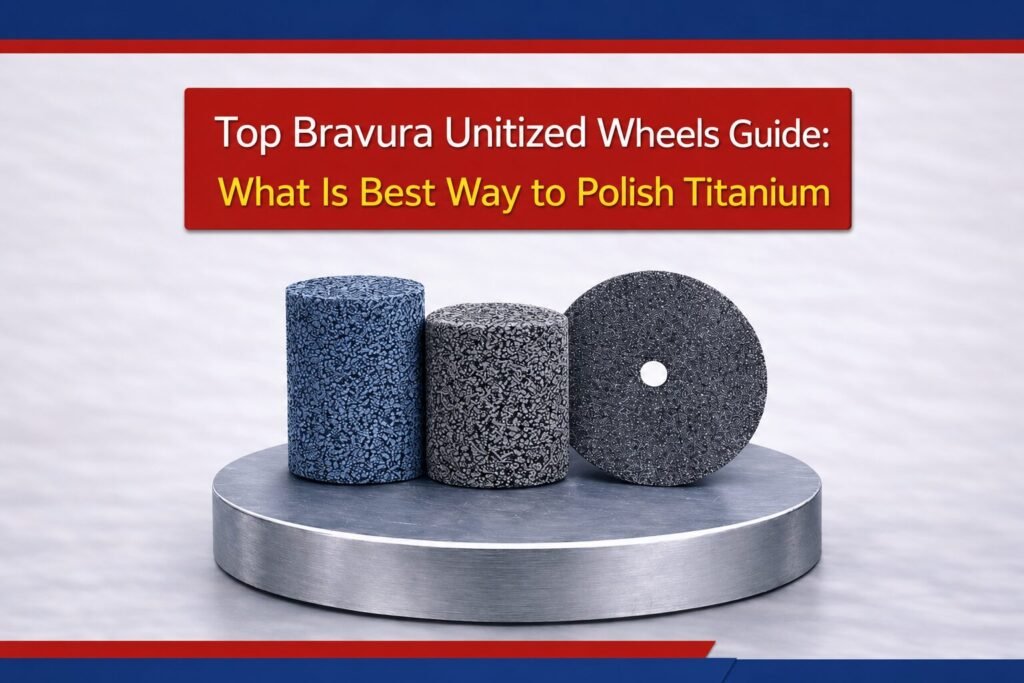
Bravura unitized wheels optimize titanium finishing by utilizing a dense, layered nylon web matrix impregnated with premium silicon carbide grains to deliver clean deburring and smooth surface conditioning without inducing structural or thermal degradation. The best way to polish titanium is to deploy an enterprise-grade, high-density Bravura unitized wheel operating at low contact pressures and controlled peripheral speeds between 15 to 22 meters per second, preventing local frictional heating and subsurface metallurgical alterations.
Key Takeaways for Industrial Stakeholders
- For CEOs & CFOs: Utilizing premium Bravura unitized wheels minimizes total cost of ownership (TCO) by reducing scrap rates and structural rejections on high-value titanium parts by up to 34%.
- For Procurement Officers: Establishing dedicated volume-tier supply chains for standardized abrasive wheel dimensions reduces lead-time risks and ensures compliance with strict international industrial specifications.
- For Plant Managers & Engineers: The advanced open-web construction eliminates mechanical loading and micro-fractures, maintaining tight dimensional tolerances and lowering machine downtime during critical turbine or medical implant manufacturing runs.
Technical Comparison: Economy Non-Woven Wheels vs. Supra Premium Bravura Unitized Wheels
| Technical Evaluation Metric | Economy Non-Woven Wheels | Supra Premium Bravura Unitized Wheels |
| Technical Threshold & Density | Low-density web, leading to structural deformation under localized loads. | High durometer ratings with uniform cross-linked nylon mesh density. |
| Operational Lifespan | Premature shredding and accelerated grain wear profiles under heavy friction. | Extended life cycle with consistent substrate adhesion dynamics. |
| Thermal Degradation Threshold | Exceeds safe limits quickly, causing localized discoloration above 180°C. | High thermal resistance prevents heat deformation and surface loading. |
| Total Cost of Ownership (TCO) Impact | High cost-per-part due to frequent changeouts and rework. | Drastically reduced cost-per-part via continuous, uniform material removal. |
| Procurement & Compliance Risk | Inconsistent batch quality, leading to variations in rotational speed tolerances. | Full alignment with strict ISO 9001:2015 manufacturing standards. |
The Material Science of Titanium Surface Conditioning
Titanium alloys possess a high strength-to-weight ratio and exceptional corrosion resistance. However, their low thermal conductivity and chemical reactivity at elevated temperatures make finishing a highly complex engineering task. Traditional abrasive wheels often generate excessive frictional heat, causing localized structural alterations or forcing atmospheric contaminants into the workpiece surface.
Overcoming Thermal Degradation Thresholds
When titanium surfaces are subjected to improper grinding parameters, temperatures can easily exceed crucial thresholds, leading to rapid oxide layer formation or alpha-case development.
- Bravura unitized wheels feature a distinct three-dimensional matrix that naturally sheds worn grains to expose fresh cutting edges continuously.
- This open-web architecture facilitates efficient air cooling across the contact zone, keeping operations well below critical thermal deformation points.
- Maintaining strict temperature control preserves the underlying tensile shear strength and integrity of the component.
[Consistent Rotational Speed] ──> [Open-Web Air Cooling] ──> [Prevents Local Heating] ──> [Zero Alpha-Case Development]
Optimizing Tensile Shear Strength and Finish Integrity
Using mismatched abrasives can introduce hidden defects, such as vibration harmonics that create micro-fractures along the substrate. Supra’s Bravura wheels are manufactured with strict dynamic balance calibration to ensure smooth, vibration-free execution. This precision prevents smearing, gouging, and stress-concentration points, allowing components to meet rigid aerospace and medical specifications perfectly.
Step-by-Step Blueprint: The Best Way to Polish Titanium
Achieving a pristine, defect-free surface finish on titanium components requires systematic execution and adherence to specific operational protocols.
1. Pre-Cleaning and Surface Inspection
Before exposing the workpiece to any abrasive action, clean the metal substrate thoroughly to remove residual cutting fluids, surface oils, or particulate contaminants. Any foreign matter left on the surface can get trapped within the wheel matrix, causing unintended scratches or loading.
2. Selecting the Correct Wheel Density and Grain Configuration
For initial deburring and scale removal, implement a hard-density Bravura wheel embedded with coarse silicon carbide or premium ceramic grains. For the final reflective polishing stages, transition to a medium or soft-density wheel with fine silicon carbide grains to achieve a low, uniform roughness average (Ra value).
3. Adjusting Rotational Speed Tolerances (RPM Limits)
Set your variable-speed finishing equipment to match the recommended peripheral velocity limits. For titanium processing, keep the operating speed between 1,800 and 3,000 RPM depending on the wheel diameter, ensuring the system remains safely within its certified rotational speed tolerances.
- Operational Rule: Never exceed the maximum safe RPM stamped directly on the abrasive wheel hub.
- Execution Tip: Use lighter manual or mechanical contact pressure; let the specialized grain wear profiles do the cutting work.
4. Implementing the Finishing Pass Technique
Maintain a consistent, fluid motion across the workpiece, moving parallel to any existing machining lines. Avoid lingering on a single spot, as localized dwell times can disrupt structural adhesion dynamics and cause minor dimensional dips.
Maximizing Operational Efficiency in Commercial Procurement
For high-volume manufacturing facilities, purchasing abrasive tools involves balancing technical performance with supply chain predictability. Mitigating procurement risks requires sourcing components from manufacturers that maintain rigorous quality baselines.
Reducing Total Cost of Ownership (TCO)
Selecting cheaper, low-tier abrasive wheels often seems economical on initial purchase orders, but these savings dissolve when factoring in frequent production line stops, shorter operational lifespans, and high part-rejection rates.
- Predictable Replacement Intervals: Standardizing on premium Bravura formulations allows production managers to schedule wheel swap-outs during planned maintenance windows rather than enduring unexpected line stoppages.
- Lower Scrap Rates: Uniform grain distribution prevents aggressive, uneven cuts, saving expensive titanium alloys from being scrapped during the final finishing stages.
Securing High-Volume Supply Pipelines
Procurement teams must ensure that their vendors can adapt to shifting production volumes without sacrificing component quality. Supra Industries provides seamless technical integration, reliable volume-tier pricing structures, and verifiable compliance records to streamline global supply chains.
Our engineering team works closely with enterprise partners to design custom shapes, specific durometer ratings, and tailored mounting systems optimized for automated robotic finishing arms and manual polishing lathes alike.
Streamline Your Industrial Surface Finishing Workflow
Enhancing your factory’s production throughput, maintaining strict dimensional tolerances, and lowering total cost-per-part requires highly specialized abrasive solutions. Supra Industries engineers and supplies a complete lineup of high-performance Bravura unitized wheels specifically optimized for challenging alloys like titanium, inconel, and stainless steel.
Don’t let unoptimized finishing processes slow down your production line or compromise your component quality. Review our comprehensive wholesale catalog, explore our custom manufacturing capabilities, and establish a reliable, high-volume supply pipeline tailored to your operational demands.
Contact the Supra Industries technical engineering team today to request an enterprise quote or arrange a comprehensive component optimization consultation.