
Top 5 Applications for High-Density Flap Discs
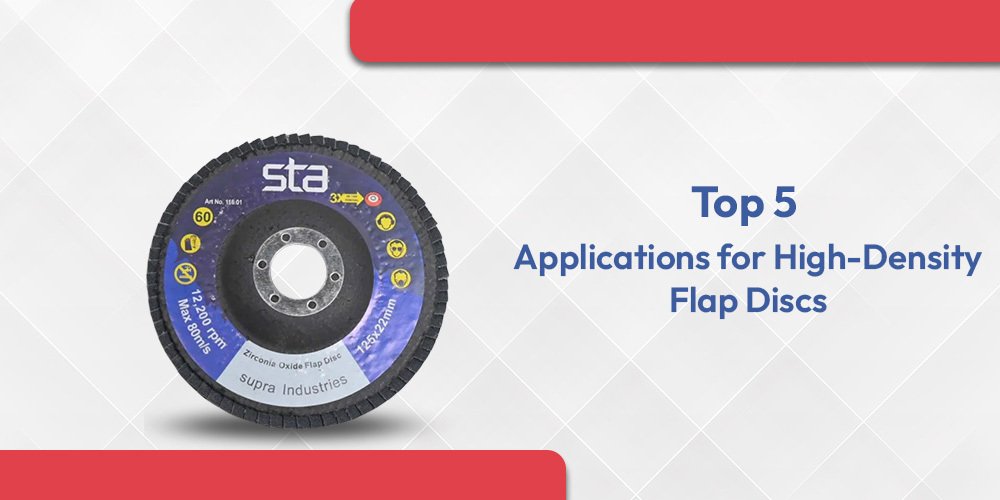
In the world of metal fabrication and finishing, efficiency and quality are paramount. The tools you choose can make all the difference between a project that is completed on time and to the highest standard and one that falls short. Among the most versatile and indispensable tools in any fabricator’s arsenal is the flap disc. But not all flap discs are created equal. For those demanding applications that require extended performance and superior results, the high-density flap disc stands in a class of its own.
While a standard flap disc is a capable tool for a variety of tasks, a high-density version takes performance to the next level. But what exactly are they and in which situations do they truly shine? This comprehensive guide will delve into the world of high-density flap discs, exploring what sets them apart and detailing the top five applications where they provide a significant advantage. Whether you’re a seasoned professional or a dedicated enthusiast, understanding how to leverage these powerful tools will undoubtedly elevate the quality of your work.
What are High-Density Flap Discs and What Makes Them Different?
At its core, a flap disc is an abrasive tool made of overlapping flaps of coated abrasive material arranged in a circular pattern on a rigid backing plate. As the disc is used, the flaps gradually wear away, exposing fresh abrasive grain underneath. This design allows for a consistent cut rate and a smoother finish compared to traditional grinding wheels.
A high-density flap disc, as the name suggests, packs more abrasive material into the same amount of space. This is achieved in a few key ways:
- More Flaps: High-density discs feature a greater number of abrasive flaps compared to their standard-density counterparts. These flaps are packed more tightly together, creating a thicker, more substantial tool.
- Larger Flaps: In some designs, the individual flaps themselves are larger, providing more surface area for abrasion.
- Optimized Flap Angle: The angle at which the flaps are arranged can also be optimized to maximize the amount of abrasive material that comes into contact with the workpiece.
These construction differences result in several key advantages over standard-density flap discs:
- Longer Lifespan: With up to 40% more abrasive material, high-density flap discs last significantly longer. This means fewer disc changes, reduced downtime and lower overall abrasive costs.
- Enhanced Durability: The thicker construction makes high-density discs more robust and better suited for aggressive applications and high-pressure grinding.
- Improved Conformability: The increased number of flaps gives the disc a cushioned effect, allowing it to conform more easily to curved, contoured and irregular surfaces without gouging the workpiece.
- Smoother Grinding Action: The denser flap arrangement provides a smoother, more controlled grinding experience with reduced vibration and operator fatigue.
Now, let’s explore the five key applications where these advantages make high-density flap discs the superior choice.
1. Heavy Stock Removal and Aggressive Grinding
When a significant amount of material needs to be removed quickly, high-density flap discs are a formidable tool. This is particularly true in applications such as:
- Beveling and Chamfering Thick Plates: Preparing thick metal plates for welding often requires creating a beveled edge. The aggressive cutting action and durability of a high-density flap disc allow for rapid and precise beveling, even on hard materials.
- Removing Large Welds: In heavy fabrication, large welds need to be ground down to be flush with the surrounding material. A high-density flap disc can power through these welds, removing excess material efficiently and leaving a smooth, blended surface.
- Casting and Forging Cleanup: Cast and forged parts often have rough surfaces, excess material (flashing) and other imperfections that need to be removed. The aggressive nature and long life of high-density flap discs make them ideal for this type of heavy-duty cleanup.
Why High-Density Flap Discs Excel in Heavy Stock Removal:
The key here is the combination of an aggressive cut and a long lifespan. Standard-density discs can also remove material, but they will wear down much more quickly under the high pressure and heat generated during heavy grinding. This leads to frequent disc changes, which interrupts workflow and increases costs. The greater amount of abrasive material on a high-density disc allows it to maintain its cutting performance for a longer period, resulting in higher productivity.
Pro-Tip: For heavy stock removal, choose a high-density flap disc with a lower grit size (e.g., 36 or 40 grit) and a high-performance abrasive grain like ceramic or zirconia. A conical (Type 29) shape is also preferred for aggressive grinding, as the angled flaps provide greater surface contact.
2. Weld Blending and Finishing
Achieving a seamless and aesthetically pleasing blend between a weld and the parent material is a hallmark of quality craftsmanship. High-density flap discs are exceptionally well-suited for this task, offering a unique combination of grinding power and finishing capability.
After a weld has been laid, it often sits proud of the surface. The goal of weld blending is to grind down the weld bead until it is flush with the surrounding metal, creating a smooth, invisible transition.
How High-Density Flap Discs Master Weld Blending:
- Controlled Aggression: A high-density flap disc provides enough cutting power to remove the weld bead efficiently, but in a more controlled manner than a grinding wheel. This reduces the risk of undercutting or gouging the parent material.
- Smooth Finish: As the disc grinds, the flexible flaps conform to the surface, smoothing out the weld and blending it seamlessly with the surrounding metal. This often eliminates the need for a separate finishing step with a finer grit abrasive.
- One-Step Operation: In many cases, a single high-density flap disc can take a weld from its as-welded state to a smooth, finished blend. This one-step process saves time and simplifies the workflow.
Pro-Tip: For weld blending, select a grit size based on the desired finish. A 40 or 60 grit high-density flap disc is often a good starting point for general-purpose blending, while an 80 grit or higher can be used for a finer finish. Both conical (Type 29) and flat (Type 27) discs can be used, with the conical shape offering more aggressive removal and the flat shape providing a smoother finish.
3. Contouring and Shaping on Curved or Irregular Surfaces
Working on surfaces that are not flat presents a unique challenge. Traditional grinding wheels are rigid and can easily create flat spots or gouges on a curved workpiece. This is where the conformability of high-density flap discs truly shines.
Applications that benefit from the contouring capabilities of high-density flap discs include:
- Pipe and Tube Fabrication: Blending welds and finishing surfaces on pipes and tubes requires a tool that can follow the curved contour of the workpiece.
- Sculptural and Artistic Metalwork: Artists and sculptors often work with complex shapes and curves. A high-density flap disc allows for precise shaping and smoothing without altering the intended form.
- Automotive and Marine Bodywork: Repairing and restoring vehicle bodies often involves working on contoured panels. A high-density flap disc can smoothly blend repairs and remove imperfections on these curved surfaces.
The Conformability Advantage:
The high number of flaps on a high-density disc creates a cushioning effect, allowing the disc to flex and adapt to the shape of the workpiece. This ensures that the abrasive material is applied evenly across the surface, resulting in a smooth, consistent finish without flat spots or gouges.
Pro-Tip: When working on contoured surfaces, a flat (Type 27) high-density flap disc is often the best choice, as it offers greater flexibility and a smoother finish. Use a light, even pressure and let the disc do the work, moving it continuously across the surface to avoid heat buildup.
4. Deburring and Edge Breaking
After metal has been cut, drilled, or machined, it is often left with sharp, rough edges known as burrs. These burrs are not only a safety hazard but can also interfere with the fit and function of the part. Deburring is the process of removing these sharp edges and high-density flap discs are an excellent tool for the job.
Why High-Density Flap Discs are Ideal for Deburring:
- Efficient Removal: The abrasive flaps on a high-density disc can quickly and effectively shear off burrs, leaving a clean, smooth edge.
- Controlled Chamfering: In addition to removing burrs, a flap disc can also be used to create a small, consistent chamfer or bevel on the edge of the workpiece. This “edge breaking” process improves the safety and appearance of the part.
- Versatility: A single high-density flap disc can be used to deburr a wide variety of materials and shapes, from the straight edges of a steel plate to the intricate contours of a machined part.
Pro-Tip: For general-purpose deburring, a 60 or 80 grit high-density flap disc is a good choice. Use a light touch and hold the disc at a slight angle to the edge of the workpiece. This will allow the flaps to effectively remove the burr without removing too much material from the surrounding surface.
5. Surface Preparation and Cleaning
Before a metal surface can be painted, powder-coated, or otherwise finished, it must be properly prepared. This often involves removing surface contaminants such as rust, scale, old paint and mill scale. High-density flap discs are an effective tool for this type of surface preparation.
The Surface Preparation Power of High-Density Flap Discs:
- Aggressive Cleaning: A high-density flap disc with a coarse grit can quickly strip away rust, paint and other coatings, leaving a clean, bare metal surface.
- Creating a Surface Profile: The abrasive action of the flap disc also creates a “surface profile” or a series of microscopic peaks and valleys on the metal surface. This profile provides an excellent anchor for paints and coatings, ensuring a strong, durable bond.
- Blending and Smoothing: In addition to cleaning the surface, a high-density flap disc can also be used to blend away minor surface imperfections, creating a smooth, uniform surface that is ready for finishing.
Pro-Tip: For heavy rust or paint removal, start with a coarse grit (e.g., 40 grit) high-density flap disc. For lighter cleaning and surface preparation, a medium grit (e.g., 60 or 80 grit) will suffice. Always ensure the surface is completely clean and free of dust and debris before applying any coatings.
Choosing the Right High-Density Flap Disc
With a clear understanding of the applications where high-density flap discs excel, the next step is to choose the right disc for your specific needs. Here are a few key factors to consider:
- Abrasive Grain:
- Ceramic Alumina: Offers the fastest cut rate and longest life, especially on hard-to-grind materials like stainless steel and exotic alloys.
- Zirconia Alumina: A high-performance grain that provides an excellent combination of speed and longevity on a wide range of metals.
- Aluminum Oxide: A more economical option that is well-suited for general-purpose use on ferrous and non-ferrous metals.
- Grit Size:
- Coarse (36-40 grit): For heavy stock removal, aggressive grinding and weld removal.
- Medium (60-80 grit): For general-purpose weld blending, deburring and surface preparation.
- Fine (120+ grit): For finishing and polishing.
- Disc Shape:
- Conical (Type 29): The angled flaps are ideal for aggressive grinding and heavy stock removal.
- Flat (Type 27): The flat profile is best for blending, finishing and working on flat or contoured surfaces.
- Backing Plate Material:
- Fiberglass: The most common backing material, offering a good balance of strength, durability and affordability.
- Plastic: Provides greater flexibility and can be trimmed to expose more abrasive material, extending the life of the disc.
Safety First: A Note on Using High-Density Flap Discs
As with any power tool, safety should always be the top priority when using a high-density flap disc. Always wear appropriate personal protective equipment (PPE), including:
- Safety glasses or a face shield
- Gloves
- Hearing protection
- Respiratory protection (dust mask)
Ensure that the guard on your angle grinder is in place and properly adjusted. Inspect the flap disc for any damage before use and never exceed the maximum RPM rating of the disc.
Conclusion
High-density flap discs represent a significant step up in performance from their standard-density counterparts. Their longer lifespan, enhanced durability and superior conformability make them the ideal choice for a wide range of demanding applications. From heavy stock removal and aggressive grinding to precise weld blending and flawless surface finishing, these powerful tools can help you work more efficiently and achieve a higher quality of finish.
By understanding the unique advantages of high-density flap discs and choosing the right disc for your specific application, you can unlock new levels of productivity and craftsmanship in your metalworking projects. At Supra Industries, we are committed to providing our customers with the highest quality abrasive solutions. If you have any questions about high-density flap discs or need assistance selecting the right product for your needs, do not hesitate to contact our team of experts.